



At a Glance
- Localization helps businesses improve customer engagement, expand into international markets, and create better multilingual customer experiences.
- Translation is the foundation of scalable localization and enables multilingual communication across websites, applications, customer support systems, and marketing channels.
- AI-powered translation technologies and translation APIs help automate multilingual workflows, reduce operational costs, and accelerate global expansion.
- Modern businesses increasingly rely on scalable translation infrastructure to manage large volumes of multilingual content in real time.
- Platforms like Lingvanex support multilingual operations through AI translation APIs, automation tools, flexible deployment options, and enterprise-grade translation infrastructure.
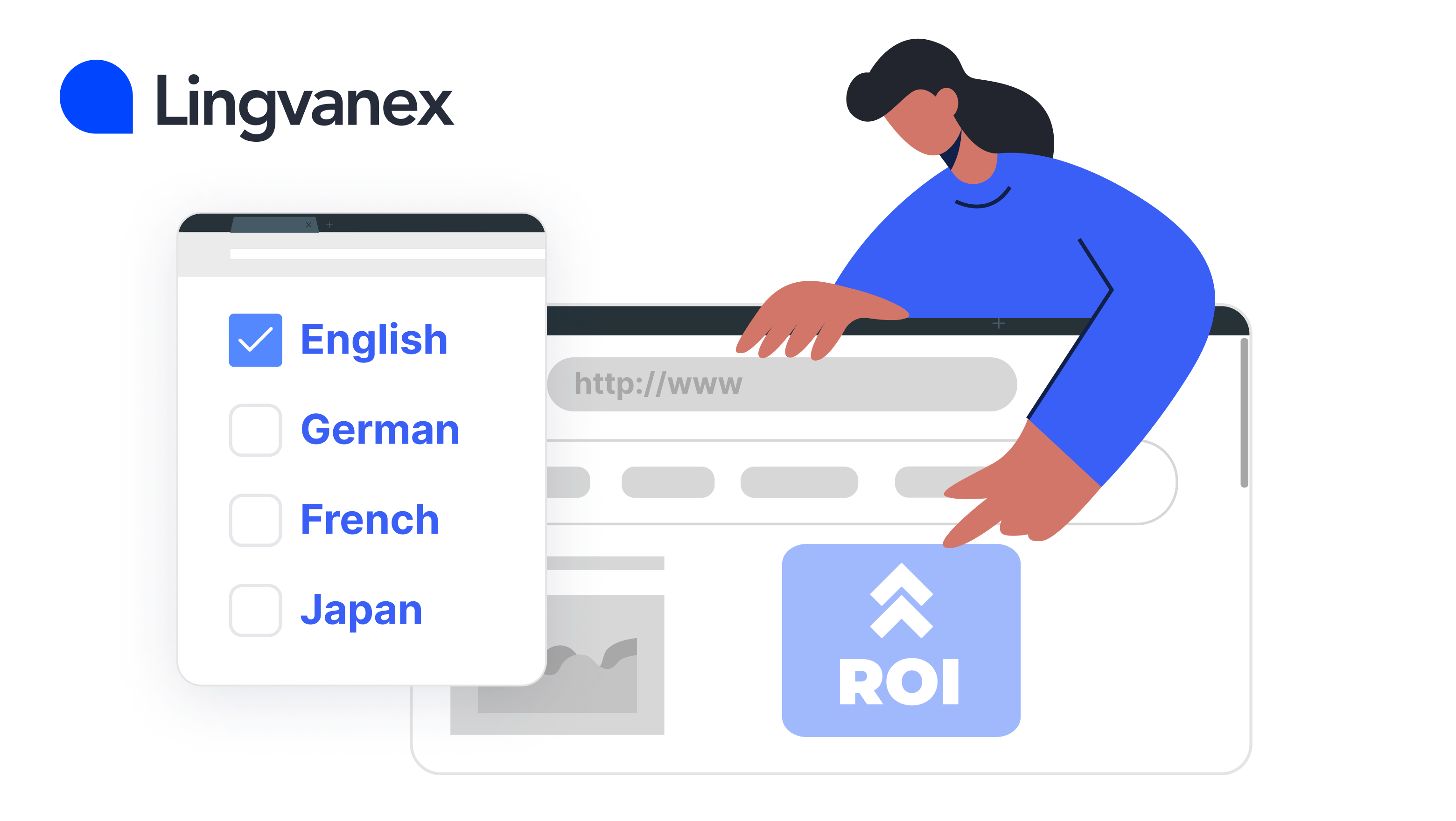
As companies expand across regions, maintaining consistent communication between products, support teams, and customers in multiple languages becomes increasingly difficult operationally. Websites, mobile applications, product interfaces, customer support materials, and marketing campaigns must be adapted for different languages and cultural expectations to provide a consistent customer experience.
According to CSA Research, 76% of online shoppers prefer purchasing products with information available in their native language, highlighting the growing importance of multilingual customer experiences for global businesses.
Localization allows organizations to adapt digital products, interfaces, and customer-facing content to the linguistic and cultural expectations of specific regional audiences. However, modern localization involves much more than traditional translation. Businesses today must continuously manage large volumes of multilingual content across multiple platforms and markets.
This article explores the role of localization and translation in international business growth, explains how companies measure localization ROI, and examines how AI-powered translation infrastructure supports scalable multilingual operations.
What is Localization
Localization is the process of adapting products, services, and content for specific languages, regions, and cultural expectations. It includes translation, but also involves modifying design, user experience, marketing messages, formats, and functionality to make products feel natural for local audiences.
For global businesses, localization helps improve customer engagement, increase trust, and create better multilingual experiences across international markets.
Localization vs. Translation
Many businesses assume that translation and localization are the same process, but this misunderstanding often creates serious challenges during international expansion. While both are essential for global growth, they solve different business problems and influence customer experience in different ways.
Translation focuses on converting content from one language into another while preserving meaning, terminology, and tone. Localization goes further by adapting the entire product experience to a specific region, culture, and market environment.
Translation
Translation involves transferring content between languages while preserving meaning, terminology integrity, contextual nuance, and brand voice consistency.
Key characteristics:
- Converts content between languages while preserving meaning and tone;
- Focuses on linguistic accuracy and terminology consistency;
- Supports multilingual communication across websites, applications, documentation, and support content;
- Primarily operates at the text and content level;
- Commonly used for technical documentation, knowledge bases, product descriptions, and multilingual content delivery;
- Commonly integrated into localization pipelines, TMS environments, neural machine translation systems, and automated content delivery architectures.
Localization
Localization adapts products, services, and digital experiences for specific languages, cultures, and regional markets.
Key characteristics:
- Includes translation as part of a broader localization workflow;
- Adapts UI/UX, layouts, visuals, and interaction patterns for regional audiences;
- Supports local currencies, date formats, payment methods, and measurement systems;
- Aligns content with cultural expectations and local communication styles;
- Improves multilingual SEO and region-specific search visibility;
- Integrates with localization platforms, CMS systems, and multilingual automation workflows.
The main difference is that translation focuses on language conversion, while localization adapts the entire customer experience for a specific market.
Why Localization Increases ROI
Localization helps businesses increase ROI by improving customer engagement, expanding market reach, and making products more accessible to international audiences. Customers are more likely to trust, understand, and purchase products that are available in their native language and adapted to local cultural expectations.
Localization increases ROI in several key ways:
- Localized websites, product pages, and customer experiences help businesses increase conversions by making content more accessible and relevant for regional audiences.
- Customers are more likely to engage with brands that communicate in their native language and align with local cultural expectations.
- Localization helps companies expand into new regions faster while reducing friction for users who expect native-language digital experiences.
- Localized applications, websites, customer support systems, and marketing content help reduce communication barriers and improve user satisfaction.
- AI-driven language automation helps organizations reduce operational translation costs, streamline international content delivery, and accelerate expansion into new regional markets.
A positive localization ROI means that localization and translation investments generate measurable business value through increased revenue, stronger customer engagement, and more efficient global operations.
The Role of Translation in Localization
Translation is the foundation of every localization strategy. Before businesses can adapt products, websites, applications, or marketing content for international markets, they must first make content available in multiple languages.
Why Translation is Essential for Localization
Translation is an essential part of every localization strategy because it allows businesses to communicate with international audiences in their native languages. It supports multilingual websites, applications, customer support systems, product documentation, and marketing campaigns while helping companies maintain consistent messaging across global markets.
Translation also creates the foundation for culturally adapted customer experiences by making products and content accessible to users in different regions. Without scalable translation workflows, businesses often struggle to support efficient localization across multiple languages and international markets.
Challenges of Traditional Translation Workflows
As multilingual content volumes grow, traditional manual translation workflows often become difficult to scale. Common challenges include:
- High translation costs for large content volumes;
- Slow multilingual content delivery;
- Delays in product launches and international campaigns;
- Inconsistent terminology across platforms and regions;
- Complex management of multilingual updates and documentation.
AI Translation and Localization Automation
To improve efficiency, many businesses use AI-powered translation technologies and localization automation tools. These technologies help companies:
- Translate large volumes of content faster;
- Reduce operational and translation costs;
- Accelerate time-to-market for global products;
- Maintain multilingual communication across multiple platforms;
- Automate translation workflows using APIs and localization systems.
Combining AI Translation with Human Expertise
Many organizations combine machine translation with human review to balance scalability, translation quality, and cultural accuracy. This hybrid approach allows businesses to build efficient multilingual workflows while improving customer experiences in international markets.
Scaling Multilingual Content with Translation APIs
Managing multilingual content at scale has become a major challenge for global businesses. Companies often need to continuously translate and update websites, mobile applications, product descriptions, customer support materials, marketing campaigns, and internal communication across multiple languages simultaneously.
Why Traditional Workflows Don’t Scale
Manual translation workflows are often too slow and resource-intensive for modern digital environments where multilingual content is constantly updated across websites, applications, customer support systems, and marketing channels. As businesses expand internationally, managing large volumes of translated content manually can increase operational costs, slow product launches, create terminology inconsistencies, and make multilingual workflows difficult to scale efficiently across global markets.
How Translation APIs Support Localization
Translation APIs enable organizations to integrate automated language processing directly into websites, applications, CMS platforms, CRM environments, and customer support systems, helping teams scale cross-language communication with less manual overhead.
This allows organizations to translate content in real time, automate multilingual updates, streamline localization workflows, and maintain consistent communication across global markets while reducing manual effort and operational complexity.
Benefits of AI-Powered Translation Infrastructure
Modern language automation platforms allow enterprises to manage high-volume cross-language content delivery without significantly increasing localization overhead.
Key benefits include:
- Faster multilingual content delivery;
- Reduced translation and localization costs;
- Improved scalability for global operations;
- Consistent multilingual communication;
- Faster international market expansion;
- Simplified localization workflow management.
Translation APIs for Global Growth
By integrating translation APIs into existing business systems, companies can build scalable multilingual workflows that support continuous international growth. AI-powered translation infrastructure allows businesses to manage multilingual content more efficiently while improving localization speed, operational efficiency, and customer experience across global markets.
Real-World Localization Examples
Localization strategies vary across industries, but in most cases businesses rely on translation technologies, multilingual workflows, and localization automation to support scalable international operations and improve customer experiences across global markets.
SaaS and Software Localization
Software and SaaS companies often localize multilingual user interfaces, onboarding flows, product documentation, and customer support systems to improve accessibility for international users. As products evolve, businesses must continuously update multilingual content across applications, websites, and help centers.
AI-powered translation technologies and localization automation help SaaS companies scale multilingual workflows more efficiently, accelerate product launches in new markets, and maintain consistent communication across different languages.
E-commerce Localization
Localization also helps online retailers optimize multilingual SEO, improve regional marketing campaigns, and create more personalized shopping experiences for international audiences.
E-commerce platforms often face additional localization complexity due to continuously changing product catalogs, regional pricing, seasonal campaigns, and multilingual search indexing requirements. Large-scale online retail localization workflows are discussed in more detail in our article on “E-Commerce Localization: Scaling Global Online Stores”.
Customer Support Localization
Global businesses localize FAQs, help centers, chat systems, email communication, and technical support materials to provide better multilingual customer experiences. Fast and accurate multilingual support helps improve customer satisfaction, increase retention, and strengthen brand trust in international markets.
Many companies use AI translation and translation APIs to support real-time multilingual communication across customer service platforms and internal support workflows.
Marketing and Content Localization
Businesses localize websites, advertising campaigns, social media content, email marketing, and blog articles to adapt messaging for different cultural and regional audiences. Regionally adapted marketing content often performs better because it aligns more closely with local search behavior, cultural expectations, and purchasing intent.
Modern AI-powered translation workflows allow marketing teams to scale multilingual content production faster while maintaining consistent brand communication across regions.
The Growing Demand for AI Translation
As global digital communication continues to expand, businesses are producing more multilingual content than ever before. Websites, mobile applications, product updates, customer support systems, marketing campaigns, and internal communication channels all require continuous translation across multiple languages and regions.
Traditional translation workflows often struggle to keep pace with the growing volume and speed of modern content production. Manual translation processes can increase operational costs, delay international launches, and make it difficult for businesses to maintain consistent multilingual communication across global markets.
AI translation technologies help organizations manage multilingual content more efficiently by automating translation workflows and accelerating content delivery at scale. Machine translation can process large amounts of text in real time, allowing businesses to support faster international expansion while reducing translation costs and improving operational efficiency.
The growing demand for multilingual customer experiences has also increased the adoption of translation APIs and localization automation platforms. Businesses increasingly integrate AI translation directly into websites, applications, content management systems, and customer support environments to enable scalable multilingual communication.
As AI translation technologies continue to improve, they are becoming an essential part of modern global business infrastructure, helping companies support multilingual growth, improve localization ROI, and deliver faster customer experiences worldwide.
How Lingvanex Supports Scalable Multilingual Operations
As businesses expand globally, managing multilingual content across websites, applications, customer support systems, product documentation, and marketing channels becomes increasingly complex. Continuous translation workflows require scalable infrastructure capable of processing large volumes of multilingual content efficiently and in real time.
AI Translation Infrastructure for Enterprise Workflows
Lingvanex provides AI-powered machine translation technologies designed for scalable multilingual operations and enterprise localization workflows. Through Translation APIs, SDKs, and automation tools, businesses can integrate AI translation directly into websites, mobile applications, CMS platforms, CRM systems, customer support environments, and internal business infrastructure.
Real-Time and Large-Scale Translation Processing
The platform supports both synchronous and asynchronous translation modes:
- Real-time translation for dynamic content such as chat messages, user-generated content, and UI updates
- Batch processing for large datasets including product catalogs, documentation, and multilingual content repositories
This enables scalable throughput for high-volume localization pipelines and continuous content updates.
Flexible Deployment and Enterprise Security
Lingvanex offers multiple deployment options, including cloud API, private cloud, on-premise installation, and containerized deployment for enterprise environments.
This flexibility allows organizations to align translation infrastructure with internal security policies, including GDPR compliance requirements and controlled data processing environments.
Translation Customization and Terminology Management
The platform supports domain adaptation, terminology management, and customizable translation workflows that help businesses maintain translation consistency across industries, products, and regional markets. This allows organizations to align multilingual content with industry-specific language, brand voice, and technical terminology.
Scalable Multilingual Operations
By combining AI translation, workflow automation, and scalable infrastructure, Lingvanex enables organizations to build efficient multilingual operations while reducing localization costs, accelerating international expansion, and improving multilingual customer experiences across global markets.
Conclusion
Localization has become an essential part of global business growth, helping companies improve customer engagement, expand into international markets, and create better multilingual customer experiences. As multilingual content volumes continue to grow, businesses increasingly rely on scalable translation workflows to support websites, applications, customer support systems, and marketing communication across global markets.
AI-powered translation technologies, translation APIs, and localization automation help organizations reduce operational costs, accelerate international expansion, and maintain consistent multilingual communication at scale. Organizations that integrate localization into their broader content operations strategy are typically better equipped to scale international growth efficiently and maintain consistent customer experiences across regions.