



Key Takeaways
- AI-powered phone call translation helps customer support teams communicate with international customers in real time without language barriers.
- Real-time voice translation improves customer support efficiency by reducing response delays, lowering multilingual staffing costs, and enabling 24/7 multilingual communication.
- Modern phone call translators use conversational AI, speech recognition, machine translation, and speech-to-speech translation technologies to automate multilingual communication during live calls.
- Businesses can use AI phone call translation to improve customer support KPIs such as response speed, first-call resolution (FCR), customer satisfaction (CSAT), and SLA compliance.
- Lingvanex Phone Call Translator supports 30+ languages, calls to 160 countries, real-time transcription, and privacy-focused multilingual communication for customer support teams and global businesses.
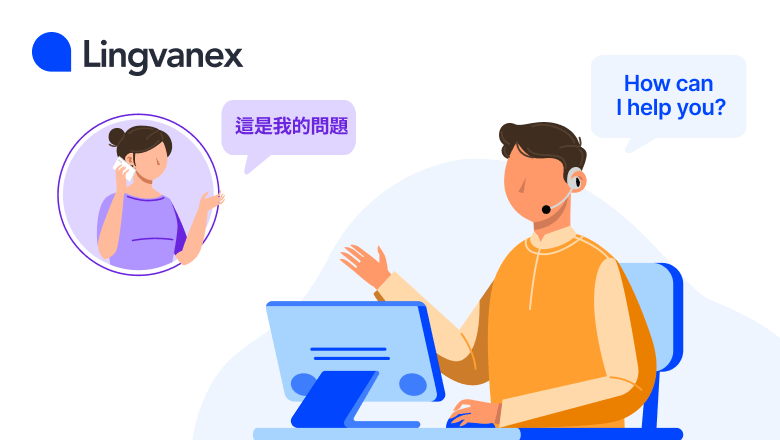
Communication barriers remain a major challenge for global customer support teams. An AI-powered phone call translator helps businesses provide multilingual support during live calls without hiring large multilingual teams. Using conversational AI, speech-to-speech translation, and voice AI technologies, companies can communicate with international customers faster and more efficiently.
A phone call translator for customer support helps businesses improve response times, reduce language barriers, and deliver better customer experiences across global markets. Whether for technical support, sales inquiries, or customer communication, real-time call translation makes multilingual customer service more accessible and scalable.
Lingvanex Phone Call Translator combines speech recognition, machine translation, and AI voice technologies to support multilingual communication during live calls. By using AI-powered phone call translation, call centers and customer support teams can improve efficiency, reduce staffing costs, and provide consistent support for customers worldwide.
What is a Phone Call Translator
A phone call translator is an AI-powered communication tool that translates conversations between people speaking different languages during live phone calls. It uses speech recognition, machine translation, and voice synthesis technologies to convert spoken words into another language in real time, allowing participants to communicate naturally without language barriers.
Unlike traditional interpretation services, a real-time phone call translator automates the translation process and makes multilingual communication faster, more scalable, and more affordable for businesses. Customer support teams, call centers, and international companies can use phone call translation software to assist customers worldwide without hiring large multilingual teams or relying on external interpreters.
Modern phone call translators act as multilingual AI assistants that use conversational AI and speech recognition technologies to support real-time multilingual communication. This enables companies to provide multilingual customer support, improve response times, and deliver a better customer experience across global markets.
How Does Real-Time Call Translation Work
The system uses speech-to-speech translation and AI communication tools to process multilingual conversations during live calls. The process happens automatically within seconds, allowing customer support agents and customers to communicate naturally in different languages.
How AI Phone Call Translation Works Step by Step
- Step 1: Voice Recognition. The system captures the speaker’s voice during the phone call and converts spoken language into text using automatic speech recognition (ASR) technology.
- Step 2: Speech Translation. The recognized text is processed by a neural machine translation engine that instantly translates the conversation into the target language.
- Step 3: Voice Synthesis. After translation, text-to-speech technology generates natural-sounding audio in the listener’s language.
- Step 4: Real-Time Audio Delivery. The translated speech is delivered to the other participant during the live call with minimal delay, enabling smooth multilingual communication.
- Step 5: Conversation Continuation. The same process repeats throughout the conversation, allowing both participants to speak in their native languages during the call.
This AI-powered workflow helps businesses provide real-time multilingual customer support, improve communication with international clients, and reduce language barriers in customer service operations.
Benefits of Phone Call Translation for Customer Support Teams
AI-powered phone call translation helps customer support teams solve common communication challenges in multilingual environments. Real-time voice translation improves support efficiency, reduces operational costs, and helps businesses deliver better customer experiences across international markets.
- Reduce Multilingual Staffing Costs. Hiring and training native-speaking support agents for every language can significantly increase operational costs. A phone call translator helps businesses support multilingual communication without expanding large multilingual customer support departments.
- Expand Global Customer Support. Real-time phone call translation allows businesses to communicate with customers from different countries without language barriers. Companies can support international users more effectively and provide multilingual customer service across global markets.
- Support Customers 24/7. Providing multilingual customer support around the clock is often expensive and operationally complex. AI-powered phone call translation enables businesses to assist international customers at any time without depending on language-specific shifts or external interpreters.
- Improve Customer Experience. Customers are more comfortable communicating in their native language during support calls. Real-time voice translation helps create smoother conversations, improve communication clarity, and deliver better multilingual customer experiences.
- Scale Customer Support Operations. AI-powered phone call translation allows businesses to scale multilingual customer support more efficiently as they expand into new markets. Companies can manage increasing volumes of international customer interactions without building separate support teams for every language.
- Support Rare and Less Common Languages. Supporting less common languages can be difficult for many businesses. Phone call translation software helps companies communicate with customers in a wider range of languages and provide more accessible customer support worldwide.
- Simplify International Business Communication. In addition to customer support, AI-powered call translation helps businesses communicate with international partners, clients, and remote teams more effectively. Real-time multilingual communication improves accessibility and reduces language barriers across global business operations.
Phone call translation helps businesses reduce multilingual support costs, improve global customer accessibility, and scale international customer support operations more efficiently. AI-powered real-time voice translation also enables companies to provide better multilingual customer experiences and support customers worldwide without language barriers.
AI Phone Call Translation vs. Human Interpreters
Businesses that provide multilingual customer support often choose between AI-powered phone call translation and traditional human interpreters. While both solutions help overcome language barriers, they differ significantly in speed, scalability, operational costs, and availability.
Advantages of AI Phone Call Translation
AI-powered phone call translation helps businesses automate multilingual communication during live calls and scale customer support operations more efficiently. Key advantages include:
- Real-time communication. AI phone call translation delivers translated speech within seconds, helping customer support teams respond faster during live conversations.
- 24/7 multilingual support availability. AI-powered customer support systems can operate continuously without depending on interpreter schedules or language-specific shifts.
- Lower operational costs. Businesses can reduce expenses associated with hiring, training, and managing multilingual support agents or external interpreters.
- Scalable customer support operations. AI-powered contact centers can support large volumes of multilingual calls across different regions and languages simultaneously.
- Instant language accessibility. Support agents can communicate with international customers immediately without waiting for interpreter availability.
- Improved support workflow automation. AI communication tools help automate multilingual customer support workflows and improve operational efficiency.
When Human Interpreters are Still Useful
Human interpreters remain important for situations that require advanced contextual understanding, cultural sensitivity, or highly specialized communication.
Common examples include:
- Legal consultations and court communication;
- Complex medical discussions;
- Sensitive financial negotiations;
- Government and diplomatic communication;
- Situations requiring precise emotional interpretation.
However, human interpretation services often involve higher operational costs, scheduling limitations, and slower response times compared to AI-powered real-time call translation.
AI phone call translation is often the most practical solution for scalable multilingual customer support because it provides faster communication, lower operational costs, instant availability, and 24/7 support coverage. Human interpreters remain valuable for highly specialized or sensitive conversations, but AI-powered multilingual communication is becoming increasingly important for modern customer service and global business operations.
Who Can Use a Phone Call Translator
AI-powered phone call translation is useful for businesses that communicate with international customers and provide multilingual support services.
- Call Centers and Customer Support Teams. Call centers use phone call translation software to communicate with customers in different languages, improve response times, and reduce multilingual staffing costs.
- E-Commerce and Online Businesses. Online businesses use real-time call translation to support international customers, manage orders, process returns, and answer product-related questions.
- Healthcare Providers. Hospitals and telemedicine services use AI phone call translation to improve patient communication, appointment coordination, and multilingual support.
- Travel and Hospitality Companies. Hotels, airlines, and travel agencies use live call translation to assist international travelers with bookings, cancellations, and customer support.
- Financial Services and Insurance Companies. Banks and insurance providers use multilingual phone call translation to communicate with international clients during support calls and financial consultations.
How Phone Call Translation Improves Customer Support Performance
AI-powered phone call translation helps businesses improve key customer support metrics by reducing communication barriers during multilingual conversations. Real-time voice translation enables support teams to resolve issues faster, improve service quality, and optimize customer support operations across international markets.
Automatic speech recognition is essential for customer support because it converts live customer-agent conversations into text for transcription, translation, search, analytics, and quality monitoring. In technical support, ASR can improve recognition of product names, error descriptions, customer intent, accents, and noisy call center speech through tools such as Vosk and custom language models (ResearchGate, 2025).
Reduce Average Handling Time (AHT)
Language barriers often increase call duration because agents need additional clarification or interpreter assistance. Real-time phone call translation helps support teams communicate more efficiently with international customers, reducing average handling time and accelerating issue resolution during live support calls.
Improve First-Call Resolution (FCR)
Misunderstandings during multilingual conversations can lead to repeated customer contacts and unresolved issues. AI-powered call translation improves communication clarity, helping agents understand customer requests more accurately and resolve problems during the first interaction.
Increase Customer Satisfaction Scores (CSAT)
Customers are more satisfied when support interactions are fast, clear, and available in their native language. Real-time voice translation improves the overall customer experience, helping businesses increase CSAT scores and build stronger relationships with global customers.
Reduce Ticket Escalations
Support tickets are often escalated when communication problems prevent agents from fully understanding customer issues. Phone call translation software helps reduce escalation rates by enabling smoother multilingual conversations and more accurate support interactions.
Improve Response Speed
International customers expect fast support regardless of their language or location. Real-time call translation helps businesses respond to customer requests more quickly without waiting for language-specific agents or external interpreters.
Improve SLA Compliance
Customer support teams often struggle to meet service-level agreements (SLAs) when multilingual requests require additional processing time or interpreter assistance. Real-time phone call translation helps businesses respond to international customers faster, reduce communication delays, and maintain more consistent support performance across global markets.
Increase Support Team Productivity
By automating multilingual communication during live calls, AI phone call translation allows support agents to focus on problem-solving instead of managing language barriers. This helps customer support teams handle more conversations efficiently and improve overall operational performance.
Real Customer Support Use Cases for AI Phone Call Translation
AI-powered phone call translation helps customer support teams communicate with international customers in real time across different industries and support scenarios. Businesses can use live call translation to improve communication quality, resolve issues faster, and provide multilingual customer support without language barriers.
- Technical Support for International Customers. A customer from another country contacts technical support regarding a software issue or device malfunction. Using real-time phone call translation, the support agent can explain troubleshooting steps, provide technical guidance, and resolve issues during the live call without requiring a multilingual specialist.
- E-Commerce Order and Delivery Support. International online stores often receive customer inquiries related to orders, shipping, refunds, and product availability. AI-powered phone call translation helps customer support teams communicate with global buyers, answer questions faster, and improve multilingual customer service for e-commerce operations.
- Travel and Booking Assistance. Hotels, airlines, and travel agencies regularly communicate with customers from different countries. Real-time call translation allows support agents to assist travelers with booking changes, cancellations, lost luggage issues, and emergency travel situations in multiple languages.
- Emergency Customer Assistance. During service outages, travel disruptions, or urgent technical incidents, fast communication is critical. AI phone call translation helps businesses provide immediate multilingual support to international customers during emergency situations without waiting for interpreters or language-specific agents.
- Financial and Banking Support. Banks and financial service providers can use phone call translation software to assist international customers with account issues, payment verification, fraud alerts, and transaction support. Real-time multilingual communication improves accessibility and customer trust during sensitive financial interactions.
- Healthcare and Patient Communication. Healthcare providers and telemedicine services can use AI-powered phone call translation to communicate with patients who speak different languages. This helps improve appointment coordination, patient support, emergency communication, and access to healthcare services.
- Multilingual IT Help Desk Support. Global IT teams often support employees and clients across different regions. Real-time voice translation allows IT help desks to resolve technical problems, explain system issues, and provide multilingual assistance during support calls more efficiently.
- International Sales and Customer Consultations. Sales teams can use live phone call translation to communicate with international prospects and customers during consultations, onboarding calls, and product demonstrations. This helps businesses improve global customer engagement and expand into new international markets.
Real-time phone call translation supports a wide range of customer service and business communication scenarios. From technical support and e-commerce assistance to healthcare communication and emergency response, AI-powered multilingual call translation helps businesses improve support accessibility, resolve issues faster, and provide better experiences for international customers.
Lingvanex Phone Call Translator for Multilingual Customer Support
Lingvanex Phone Call Translator helps businesses communicate with international customers in different languages during live phone calls. The platform combines conversational AI, speech recognition, neural machine translation, and voice AI technologies to support real-time multilingual customer communication for call centers, customer support teams, and global businesses.
Real-Time Phone Call Translation
Lingvanex enables users to translate phone calls in real time, allowing both participants to speak in their native languages during conversations. AI-powered speech-to-speech translation helps customer support teams communicate more clearly with international customers and resolve issues faster during live calls.
Support for 30+ Languages and Calls to 160 Countries
The platform supports more than 30 languages and allows businesses to place international calls to over 160 countries worldwide. This helps companies provide multilingual customer support, communicate with global clients, and expand international business operations without language barriers.
Cost-Effective International Communication
Lingvanex Phone Call Translator offers rates starting at $0.20 per minute, making international multilingual communication more affordable compared to expensive roaming and traditional interpretation services. Businesses can reduce multilingual support costs while improving accessibility for international customers.
Call Transcription for Better Communication
Every conversation is automatically transcribed and displayed on screen during the call. Real-time call transcription helps customer support agents follow multilingual conversations more accurately and improves communication clarity during customer interactions.
Privacy-Focused Communication
Lingvanex is designed with privacy in mind. Conversation data and call transcriptions are not stored, helping businesses maintain secure and confidential multilingual communication during customer support calls.
Easy Integration Into Business Workflows
Lingvanex phone call translation technology can be integrated into customer support environments, VoIP systems, and business communication platforms without major infrastructure changes. This allows businesses to implement multilingual customer communication more efficiently.
Scalable Solution for Global Customer Support
Lingvanex supports businesses of different sizes, from small support teams to enterprise-level contact centers handling international customer interactions daily. AI-powered multilingual communication helps companies scale customer support operations more efficiently across global markets.
Lingvanex Phone Call Translator helps businesses automate multilingual customer communication, reduce support costs, and improve international customer service through real-time AI phone call translation. With support for 30+ languages, international calls to 160 countries, real-time transcription, and privacy-focused communication, the platform provides a scalable solution for multilingual customer support and global business communication.
Why Multilingual Customer Support Matters
Modern businesses operate in global markets where customers expect fast and convenient support in their native language. Companies that fail to provide multilingual customer service often face communication barriers, lower customer satisfaction, and missed business opportunities. AI-powered phone call translation helps businesses remove language limitations and deliver a better customer experience across international markets.
Customers Prefer Support in Their Native Language
Most customers feel more comfortable explaining issues and asking questions in their own language. Multilingual customer support improves communication clarity, reduces misunderstandings, and creates a more positive customer experience during live phone calls.
Better Communication Improves Customer Satisfaction
Language barriers can lead to frustration, longer support sessions, and unresolved issues. Real-time phone call translation helps customer support teams communicate more effectively with international customers, resulting in faster issue resolution and higher customer satisfaction rates.
Global Businesses Need International Support
As companies expand into new regions, multilingual communication becomes essential for maintaining customer relationships. AI-powered call translation allows businesses to support international clients without building separate language-specific support teams for every market.
Multilingual Support Helps Increase Customer Retention
Customers are more likely to stay loyal to businesses that provide accessible and personalized communication. Offering multilingual customer service through real-time phone call translation helps companies build trust, improve customer engagement, and strengthen long-term relationships with global users.
Faster Support Improves Business Efficiency
Without real-time translation tools, companies often rely on interpreters, delayed responses, or limited multilingual staff availability. Phone call translation software enables support agents to communicate instantly with customers in different languages, reducing wait times and improving operational efficiency.
Language Accessibility Creates Competitive Advantage
Businesses that provide multilingual customer support can serve wider audiences and compete more effectively in international markets. AI phone call translation helps companies improve accessibility, reach new customers, and provide consistent support regardless of language differences.
Conclusion
As businesses expand into global markets, multilingual customer support becomes increasingly important. AI-powered phone call translation helps companies overcome language barriers, improve communication quality, and provide faster support for international customers.
A modern phone call translator allows customer support teams to handle multilingual conversations without relying on large multilingual departments or external interpreters. Real-time voice translation improves support efficiency, accelerates issue resolution, and helps businesses deliver better customer experiences across global markets.
Lingvanex Phone Call Translator combines speech recognition, neural machine translation, and AI voice technologies to support fast and efficient multilingual communication during live calls. Businesses can use AI-powered call translation to scale international customer support, reduce operational costs, and improve global customer communication.
References
- Springer (2021), Robust Automatic Speech Recognition for Call Center Applications.
- ResearchGate (2021), Call Transcription Methodology for Contact Center Systems.
- McKinsey&Company (2022), From Speech to Insights: The Value of the Human Voice.
- ACMDL (2024), Intelligent Customer Service System Based on Speech Emotion Recognition.
- ResearchGate (2025), Optimizing Speech Recognition for Customer Service Applications with Vosk and Custom Language Models.