



At a Glance
- Real-time phone call translation enables businesses to communicate instantly across languages without interpreters or delays.
- It combines speech recognition, machine translation, and voice synthesis to deliver seamless multilingual conversations.
- This approach helps accelerate decision-making, improve customer interactions, and support global operations at scale.
- Modern systems provide near real-time responses, while continuously balancing speed and translation accuracy.
- It is widely used in customer support, sales, vendor communication, and international team collaboration.
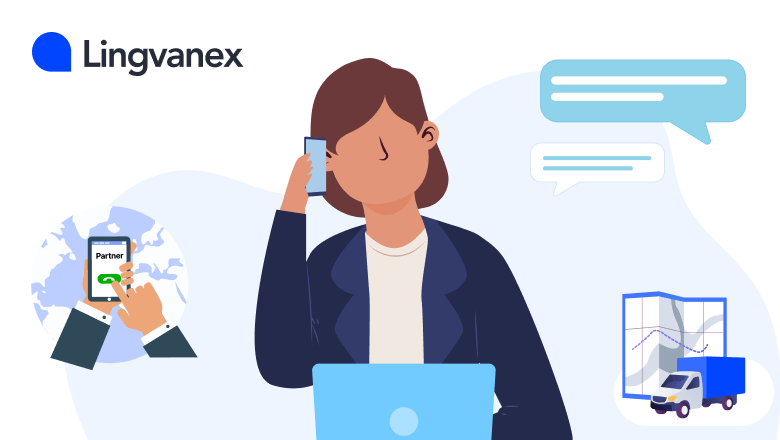
In global operations, voice communication remains one of the most difficult channels to scale due to language barriers. As a result, teams often avoid real-time conversations, relying on slower alternatives like email or chat, even when immediate discussion would be more effective.
With advances in speech recognition and machine translation, real-time phone call translation has become a practical tool for everyday business operations. In practice, avoiding miscommunication during live calls often forces teams to switch to asynchronous channels. This reduces risk, but slows down decision-making and limits the effectiveness of real-time collaboration.
By using a call translation app, organizations can improve efficiency, reduce misunderstandings, and build stronger global relationships, all while keeping conversations natural and accessible.
What is a Phone Call Translator
A phone call translator is a software solution that enables real-time translation of spoken conversations during phone calls. It allows two or more participants to speak different languages while understanding each other instantly, without the need for human interpreters.
A modern business phone translator combines speech recognition, machine translation, and voice synthesis to convert spoken language into another language in real time. This means that during a call, each participant can speak naturally while the system translates and delivers the message in the listener’s preferred language.
Such tools are increasingly used by global companies to simplify communication with international clients, partners, and teams, making cross-border collaboration faster, more efficient, and more scalable.
How Real-Time Phone Call Translation Works
Real-time call translation requires multiple processes to run simultaneously within seconds, from speech recognition to translation and voice synthesis, without disrupting the natural flow of conversation.
A phone call translator for business processes conversations in real time through the following steps:
- Speech Capture. The system records the speaker’s voice during the call in real time.
- Speech-to-Text (ASR). The audio is instantly converted into text using automatic speech recognition.
- Language Detection. The system identifies the source language of the speaker.
- Machine Translation. The recognized text is translated into the target language using AI-based translation models.
- Text-to-Speech (TTS). The translated text is converted back into natural-sounding speech.
- Playback to Listener. The listener hears the translated message in their native language during the call.
- Call Logging (Optional). The system can store transcripts and translations for future analysis and quality control.
To reduce delays in live conversations, modern systems increasingly rely on incremental translation approaches, which process speech in smaller segments rather than waiting for complete sentences. This can reduce latency by up to 50%, enabling a more natural conversational flow compared to traditional sentence-based translation (Academia, 2012). As a result, businesses can conduct calls with international clients, partners, or teams as if they were speaking the same language, making communication faster, clearer, and more efficient.
Phone Call Translation vs. Other Communication Methods
When communicating across languages, businesses typically rely on several approaches, each with distinct trade-offs in terms of latency, cost structure, scalability, and operational complexity. The choice of method often depends on how organizations balance speed, accuracy, and coordination efficiency in real-world workflows.
Human Interpreters
Offer high accuracy and deep contextual understanding, particularly in complex, high-stakes, or domain-specific conversations. However, they require advance scheduling, introduce coordination overhead, and involve significantly higher per-session costs. This makes them less suitable for on-demand communication or high-throughput environments.
Email and Chat Translation
Provide accurate, reviewable, and auditable communication, allowing users to refine messaging before delivery. However, these channels operate in an asynchronous workflow, increasing response latency, slowing down feedback loops, and limiting effectiveness in time-sensitive or interactive scenarios.
Standard Translation Apps
Are effective for translating short phrases or structured text input, typically in a single-turn interaction model. However, they are not designed for continuous, bidirectional communication and lack support for real-time conversational dynamics such as turn-taking, interruption handling, and contextual continuity.
Real-Time Phone Call Translation
Enables synchronous, low-latency communication without requiring a shared language, integrating speech recognition, machine translation, and voice synthesis into a continuous processing pipeline. This approach supports natural conversational flow while maintaining a practical balance between latency, accessibility, and scalability, making it suitable for high-frequency, real-time business interactions.
In practice, the choice of communication method depends on how organizations prioritize response time, contextual accuracy, and scalability, as well as their tolerance for coordination overhead in multilingual communication environments.
Key Benefits of Phone Call Translators for Businesses
Using a phone call translator for business provides companies with multiple advantages when operating in global markets:
- Elimination of Language Barriers. Communicate with clients, partners, and suppliers worldwide without needing a shared language. A voice translation solution ensures that conversations remain clear and accurate, regardless of linguistic differences, enabling truly global communication.
- Real-Time Communication. Enable instant conversations with real-time phone call translation, avoiding delays associated with emails or human interpreters. This allows businesses to respond faster, maintain natural dialogue, and keep communication efficient during live calls.
- Improved Customer Experience. Provide support in customers’ native languages, increasing satisfaction and trust. By using a call translation app, businesses can deliver more personalized service and reduce frustration caused by misunderstandings.
- Faster Decision-Making. Discuss issues, negotiate terms, and resolve problems immediately during live calls. Real-time translation removes communication bottlenecks, helping teams make informed decisions without waiting for translations or follow-ups.
- Cost Efficiency. Reduce the need for hiring interpreters or maintaining multilingual support teams. A scalable phone call translator for business lowers operational costs while still enabling high-quality multilingual communication.
- Scalability for Global Operations. Easily expand into new markets without language becoming a limiting factor. Businesses can enter new regions, communicate with local stakeholders, and grow internationally without investing heavily in language resources.
- Call Transcription and Insights. Store translated conversations to analyze feedback, improve services, and ensure compliance. Access to call logs and transcripts also helps teams track discussions, identify trends, and optimize future interactions.
In summary, a phone call translator for business helps companies communicate more effectively, operate faster, and scale internationally without the friction of language differences.
Limitations of Real-Time Phone Call Translation
While real-time phone call translation enables efficient cross-language communication, it operates under several practical limitations that businesses should consider.
- Latency in Live Conversations. Even advanced systems introduce a short delay (typically 1–5 seconds) due to the processing pipeline of speech recognition, translation, and voice synthesis. While generally acceptable, this can affect the natural flow of fast-paced discussions, especially in dynamic interactions such as negotiations or support calls.
- Translation Accuracy in Complex Contexts. Accuracy may vary depending on sentence complexity, domain-specific terminology, and context. Nuanced expressions, idioms, or technical language can occasionally lead to partial or imprecise translations, particularly when there is limited contextual information available in real time.
- Dependence on Audio Quality. Performance is directly affected by input quality. Background noise, low-quality connections, overlapping speech, and strong accents can reduce recognition accuracy and impact overall translation performance, especially in uncontrolled or mobile environments.
- Limited Context Awareness in Real Time. Unlike offline translation, real-time systems process speech incrementally, which can limit their ability to fully interpret longer or more complex statements. As a result, meaning may sometimes be approximated rather than precisely conveyed.
- Variability Across Languages. Translation quality and performance may differ depending on the language pair. Widely used languages typically have higher accuracy, while less common languages or dialects may show more variability in results.
In practice, understanding these limitations helps organizations set realistic expectations and choose solutions that align with their communication needs, risk tolerance, and the criticality of each interaction.
Use Cases of Phone Call Translator for Business
A call translation app can be applied across multiple scenarios where clear and immediate communication is critical for success. Unlike controlled environments, real-world phone calls introduce background noise, multiple speakers, and accent variability, all of which significantly impact translation performance. This makes reliable real-time communication especially critical in business scenarios where clarity directly affects outcomes (ScienceDirect, 2025).
Customer Support
Providing multilingual customer support is essential for global companies. With a phone call translator, support teams can communicate with customers in their native language in real time, resolving issues faster and more effectively. This reduces misunderstandings, improves customer satisfaction, and helps build long-term loyalty.
In addition, real-time translation allows support teams to handle a higher volume of requests without relying on multilingual agents, making customer service more scalable and cost-efficient.
Sales and Client Communication
Sales teams frequently interact with international prospects and clients. A real-time phone call translation solution allows them to present products, handle objections, and negotiate deals without language barriers. This makes sales conversations more natural and increases the chances of closing deals in global markets.
By removing language friction, businesses can expand their sales reach, enter new regions faster, and build stronger relationships with international clients.
Product Feedback and Market Research
When entering new regions, businesses need direct feedback from local users. A call translation app enables teams to conduct interviews, collect insights, and understand customer needs without relying on intermediaries. This leads to more accurate data and better product decisions.
Real-time communication also allows teams to ask follow-up questions instantly, resulting in deeper insights and a more precise understanding of local market expectations.
Supplier and Vendor Negotiations
Working with international suppliers requires precise communication. A business phone translator helps companies discuss pricing, delivery timelines, and contract terms clearly during live calls. This minimizes risks of misunderstandings and strengthens long-term partnerships.
Clear and immediate communication also improves negotiation outcomes and helps avoid costly errors in agreements or logistics.
Crisis Management
In urgent situations, fast communication is critical. A real-time phone call translation tool allows teams to coordinate actions, resolve operational issues, and respond to emergencies instantly, even when multiple languages are involved. This helps prevent escalation and reduces potential losses.
Being able to communicate clearly in high-pressure scenarios ensures that decisions are made quickly and accurately, which is essential for business continuity.
Event and Conference Management
Organizing international events involves constant coordination with speakers, partners, and vendors. A phone call translator app enables seamless communication across languages, ensuring that logistics, schedules, and expectations are clearly aligned. It also allows teams to revisit conversations through call logs when needed.
This simplifies event planning, reduces coordination errors, and helps ensure that all participants stay aligned before and during the event.
Internal Team Communication
Global teams often operate across multiple regions and languages, which can slow down collaboration and create misunderstandings. A real-time voice translation solution enables employees to communicate without needing a common language, making internal discussions faster and more efficient.
With real-time phone call translation, teams can align on projects, resolve issues, and share updates during live calls, regardless of location. This improves productivity, reduces communication gaps, and supports seamless collaboration in international organizations.
How to Choose a Phone Call Translator for Business
When selecting a phone call translator for business, use the following checklist to evaluate the solution:
- Does it provide real-time voice translation without noticeable delays?
- Is the translation accurate enough for business conversations and industry-specific terminology?
- How consistent is translation quality across different languages?
- How many languages are supported, and are they relevant to your markets?
- Does it handle different accents, speech speeds, and background noise effectively?
- Can it manage overlapping speech during live conversations?
- Does the solution require installation for both participants, or can it work with standard phone numbers?
- Is the user experience simple enough for non-technical users?
- Are call transcripts and history available for review and analysis?
- Can transcripts be exported or integrated into other systems?
- Does the solution meet your security and compliance requirements (e.g., GDPR)?
- Is voice and data transmission encrypted?
- Are there options for controlling or disabling data storage?
- Can it integrate with your existing tools (CRM, support systems, workflows)?
- Does it support automation or APIs for scaling usage?
- Does it scale with your business as call volume grows?
- What is the pricing model (per minute, subscription, etc.), and how predictable are the costs?
- How does it compare to alternatives such as human interpreters or asynchronous translation tools?
- Is customer support or technical assistance available if issues arise?
A well-chosen call translation app should meet these criteria and support efficient, secure, and scalable multilingual communication.
Why Choose Lingvanex Phone Call Translator
The Lingvanex Phone Call Translator is designed to meet the needs of modern global businesses by combining advanced AI technologies with practical usability. It provides a reliable and scalable solution for real-time multilingual communication across phone calls.
- Real-Time Voice Translation Across Calls. Communicate instantly in multiple languages during live calls with accurate and seamless translation, enabling natural conversations without delays.
- Global Reach with Multi-Language Support. Make calls to virtually any country and communicate in dozens of widely spoken languages, helping businesses operate internationally without limitations.
- No App Required for the Recipient. The person on the other end does not need to install any software, making communication frictionless and easy to adopt in business environments.
- Call Transcription and Conversation Visibility. Every conversation can be transcribed and displayed in real time, allowing users to track discussions, verify meaning, and revisit important details later.
- Enterprise-Level Privacy and Security. Conversations are encrypted and not stored, ensuring that sensitive business communications remain confidential and compliant with data protection standards.
- Works with Any Device, Including Landlines. The solution supports calls to mobile phones and landlines worldwide, making it highly flexible for different business scenarios.
- Cost-Effective International Communication. Compared to traditional international calls or interpreters, the solution offers a more affordable way to communicate globally while maintaining high quality.
Overall, the Lingvanex Phone Call Translator stands out as a practical and business-ready solution that combines real-time translation, global accessibility, and strong privacy standards, making it an effective tool for companies operating across borders.
Security and Data Privacy in Voice Translation
When using a phone call translator for business, security and data privacy are critical factors, especially when handling sensitive conversations with clients, partners, or internal teams. Companies must ensure that their communication tools meet strict security standards and protect confidential information at every stage of the translation process.
- End-to-End Encryption. Secure transmission of voice and translated data prevents unauthorized access during live calls.
- No Data Storage or Controlled Storage Options. Businesses should have clarity on whether conversations are stored, and the ability to disable storage when required for compliance.
- Compliance with Data Protection Regulations. Support for standards such as GDPR ensures that user data is processed and protected according to legal requirements.
- Secure Speech Processing. Audio, text, and translations should be handled within protected environments to avoid data leaks.
- Access Control and Authentication. Only authorized users should be able to access call logs, transcripts, or translation data.
- Enterprise Deployment Options. Solutions that offer on-premise or private cloud deployment provide additional control over sensitive data.
Ensuring strong security and data privacy in voice translation is essential for building trust and safely scaling global communication. A reliable voice translation solution should not only deliver accurate translations but also guarantee that every conversation remains protected and compliant.
Conclusion
A phone call translator for business is becoming an essential tool for companies operating in global markets. It enables real-time communication, reduces friction, and helps businesses scale without language limitations. By removing communication barriers, organizations can respond faster, make better decisions, and operate more efficiently across regions.
With the Lingvanex solution, organizations can communicate instantly across languages, improve customer interactions, and expand internationally with confidence. Whether it’s sales, customer support, or internal collaboration, real-time voice translation helps teams stay aligned and productive in any market.
References
- Arxiv (2025), Better Late Than Never: Evaluation of Latency Metrics for Simultaneous Speech-to-Text Translation.
- ScienceDirect (2025), End-to-End Speech-to-Text Translation: A Survey.
- MIT Press Direct (2025), How “Real” is Your Real-Time Simultaneous Speech-to-Text Translation System?
- ACL Anthology (2025), CA: Addressing Evaluation Pitfalls in Computation-Aware Latency for Simultaneous Speech Translation.*
- ACL Anthology (2026), Attention as a Guide for Simultaneous Speech Translation.